
There's an invisible wall between your therapy and your patient.
I can remove it.
When a child's nervous system is stuck in chronic survival mode, the best therapeutic interventions bounce off. I identify and address the physiological barriers—so your work can finally take hold.
30 min • No cost • No obligation
The information on this page is grounded in peer-reviewed research and clinical evidence.
The EEG Pattern
In pediatric patients with developmental challenges, I consistently observe posterior beta hyperactivation—a marker of chronic limbic activation that compromises prefrontal cortex executive function.
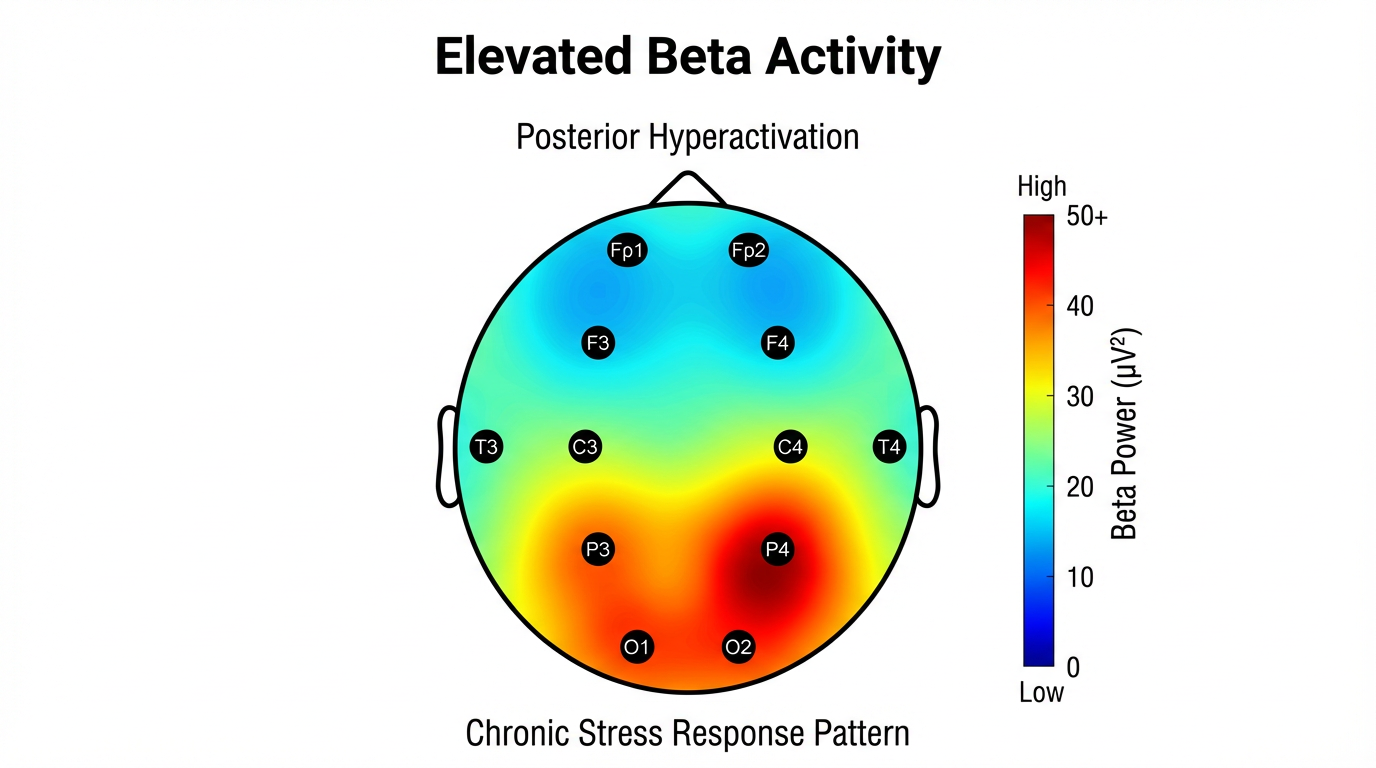
EEG Topographic Map: Posterior beta hyperactivation indicative of chronic stress response
Key Map Findings:
- • Red/Orange = Beta hyperactivation (posterior)
- • Blue = Normal/reduced activity
- • Pattern indicates chronic alert status
!Clinical Implications
- Autonomic nervous system in persistent sympathetic dominance
- Reduced capacity for neuroplasticity and learning consolidation
- Therapeutic interventions limited by baseline hypervigilance
- HPA axis deficits potentially underlying
The Clinical Question
"What is keeping this patient's nervous system in chronic alert status, and how can we address it so your interventions can take hold?"
Gut-Brain Axis Dysfunction
Functional testing frequently reveals dysbiosis, elevated intestinal permeability, and neurotransmitter precursor deficiencies—factors that perpetuate CNS dysregulation independent of behavioral interventions.
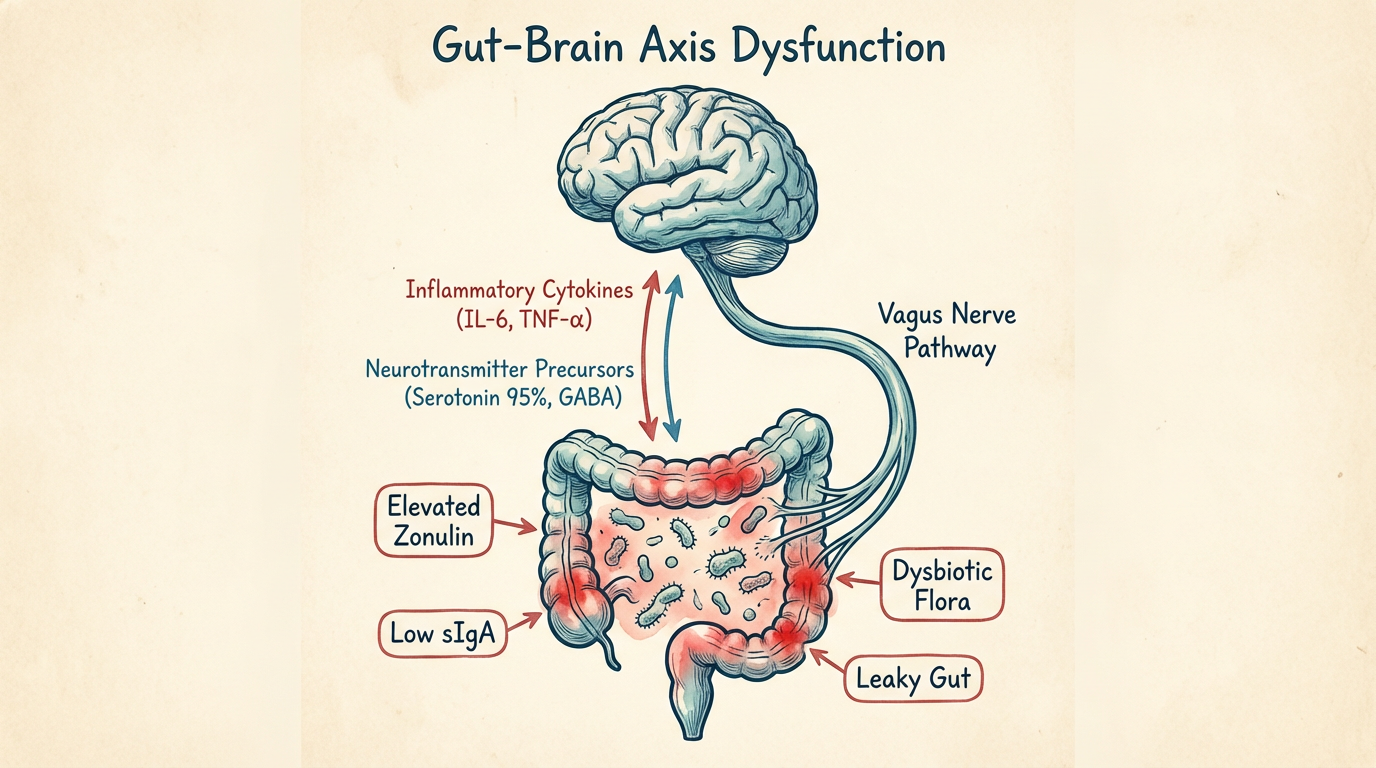
Bidirectional pathways: vagus nerve, inflammatory cytokines, neurotransmitter precursors
Communication Pathways:
- • Vagus nerve → direct gut-brain signaling
- • Cytokines → systemic inflammatory response
- • Metabolites → neurotransmitter precursors
Commonly Elevated Biomarkers
Zonulin
Intestinal permeability
Calprotectin
Gut inflammation
sIgA (low)
Mucosal immunity
LPS Antibodies
Bacterial translocation
Organic Acids
Microbial metabolites
Histamine
Mast cell activation
Clinical Relevance: 95% of serotonin is produced in the gut. Dysbiosis directly compromises availability of neurotransmitters critical for mood regulation and cognitive function.
Neuroinflammation Cascade
HPA axis dysregulation creates a feedback loop: chronically elevated cortisol → neuroinflammation → prefrontal cortex suppression → executive function deficits that behavioral interventions cannot overcome.

There's an invisible wall between your therapy and your patient.
I can remove it.
BEFORE
Therapy bounces off physiological wall
AFTER
Therapy reaches and consolidates
When we address the underlying physiological drivers—inflammation, dysbiosis, mitochondrial dysfunction, micronutrient deficiencies—the nervous system can exit chronic alert status. Neuroplasticity is restored. And your therapeutic interventions can finally consolidate.
This is the physiological piece that complements your work.
Assessment Panel
Targeted functional testing based on clinical presentation
Quantitative EEG
Brain mapping to identify dysregulation patterns and guide neurofeedback protocols
Comprehensive Stool Analysis
Microbiome composition, pathogens, inflammatory markers, digestive function
Organic Acids Test
Mitochondrial function, neurotransmitter metabolites, yeast/bacterial overgrowth
Food Sensitivity Panel
IgG-mediated reactions contributing to systemic inflammation
Micronutrient Analysis
Zinc, magnesium, B vitamins, vitamin D—critical cofactors for neurotransmitter synthesis
Hormone Panel
Cortisol rhythm, thyroid function, DHEA—HPA axis assessment
Collaboration Model
I work parallel to your treatment, focusing exclusively on physiological barriers while you continue behavioral and developmental interventions.
You Receive
- Summary of lab findings relevant to your treatment
- Progress updates as parents authorize
- Direct access for clinical questions
- Collaborative case consultation when helpful
Reported Clinical Outcomes
- Improved attentional regulation during sessions
- Reduced frequency and intensity of meltdowns
- Increased receptivity to behavioral interventions
- Accelerated progress toward therapeutic goals
"But do you take insurance?"
This is the most common question I hear from providers. Let's address it directly.
I don't bill insurance directly. And there's a reason: insurance plans rarely cover the kind of deep functional work that moves the needle for these kids.
But here's what I've observed in 20+ years:
When you and the family both see the value, they always find a way.
Detailed Superbills
Every family receives a superbill with ICD-10 codes to submit to their insurer for potential reimbursement.
Some families have had success getting partial reimbursement, especially with PPO plans.
HSA & FSA Accepted
All my services qualify for HSA and FSA payment—pre-tax dollars many families already have set aside.
Works like a regular debit card. No extra paperwork.
Easy Financing
We offer Pay Later options through PayPal—pay in 4 interest-free installments or monthly payments for larger services.
Soft credit check only. Doesn't affect credit score.
The real question isn't whether families can afford it. The real question is:
What's it costing them NOT to address the underlying physiology?
More years of therapy without traction. More frustration. More burnout. When you value this work, your patients will too—and together, we'll find the path.
Exclusive Offer for Professionals
Experience the EEG Brainscan — On Us
If you are a therapist, teacher, or health professional working with children on the spectrum, we want you to see firsthand what a functional EEG brain map reveals. The same scan we use with our patients — completely free for you.
📱 Text "EEG" to (954) 780-6472
To schedule your complimentary EEG Brainscan. No commitment. No cost.
Available to healthcare professionals, therapists, and educators. Ongoing offer.
Let's Be Direct
Every week without addressing the physiology is another week of plateau.
I'm not asking you to refer every patient. I'm asking you to consider: what if there's a missing piece?
Case Strategy Session
Bring a patient who's stuck. In 30 minutes, I'll show you exactly what I'd test and why. No cost. No obligation. Just clarity.
Discuss a Case Now"Families referred to me by therapists report faster progress toward therapeutic goals because we're attacking the problem from both sides."
P.S. If you have a caregiver mom who's burned out, I can help her too. Mom's wellbeing and her child's are connected.
John Arango, ND, CAS, NPT-C • Board Certified Autism Specialist • Certified Neuropsychotherapist
Want to Be Featured on Our Site?
We spotlight the amazing professionals who serve the autism and developmental community. The families who follow us will see your work, your passion, and how to reach you.
Answer 3 questions, upload your photo and logo, and we'll send you a preview before publishing.
See how we showcase professionals like you → View current spotlights
Submit My Spotlight